Tuesday, August 24, 2010

Gwen In Purgatory - Belvoir

I am not normally the sort of person to complain about a lack of “Australian stories” on theatre stages. I have a certain amount of belief in the universality of the human race and don’t really care where a play is written or who it is written for as long as it’s good. I’m much more critical of television in this respect, and get really excited whenever home grown shows do well – I was over the moon the other day when I found out that Gruen Nation won the ratings for Wednesday. I think this differing standard is due to the fact that television has a larger audience and stands to affect our culture more dramatically. Anyway, this is getting off topic. The point is that I don’t give plays extra brownie points for being written by Australian playwrights. I think this is perhaps also related to the writing I normally like which is generally more international issue based than local problem based. However, in the case of Gwen In Purgatory, I felt a definite sense of pride that it was written by an Australian for an Australian audience.

If I’m honest with myself, there is one big reason for this – the play is set less than an hour away from my hometown of Goulburn and Goulburn even warrants a mention in the play (even if it is only for our gaol). I’m sure for people who live in New York or London it would be exhausting to get excited about every new film or TV series or play that mentions your home city, but for me, it is downright exhilarating to hear the words “he went to Goulburn” on a stage. Apart from this irrational excitement, it also means that I get most of the local references, which is nice, but far from enough to carry almost two hours of theatre. Fortunately however, Tommy Murphy has written a delightful play with characters who are fascinating and perhaps more to the point, familiar.
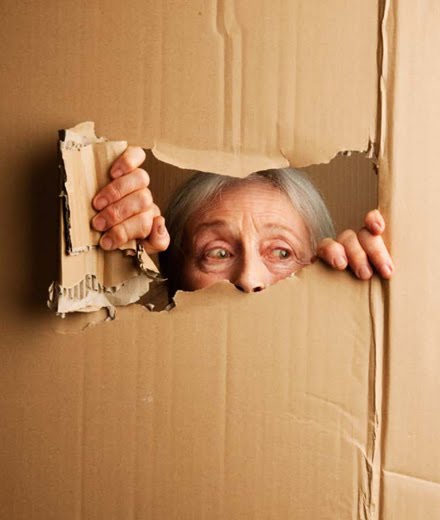

Gwen is 90 and has just moved into a new house. Not just any house, but rather one of those new development type places that exist on the edges of towns and look like they were bought from IKEA and then simply put together on site. The sort of place one drives past and thinks “who would ever want to live out here?” To which one answers, “I guess rich retirees who want to get away from the city”. Gwen is certainly not rich, but she is definitely a retiree, perhaps several times over. As we watch this slice of life, we soon discover that her children’s stories are just as important here and are in fact at the centre of the drama that drives the play. What makes it so compelling is that every person who is shown on stage is someone that you’ve met. You’ve met the troubled grandson who’s job has saved him from worse, you’ve met the slimy uncle who’s out to make a buck wherever he can, you’ve met the worried mother who’s trying for a new life. Perhaps the only person one is likely to not have met is the Catholic priest who’s come over from Nigeria, and he is certainly someone worth meeting. This is not to say that they are stereotypes, far from it, but rather that in this case, we are seeing art reflecting life in the positive sense of the term.

It is the characters’ likeability that gives the play its success. With perhaps one exception, I found myself drawn to everyone who appeared, desperate to give them all a fair hearing. I found myself particularly drawn to Peg, whose story of a life dedicated to others I found most touching. Neil Armfield, as always, has brought out the humanity in the play to its fullest, and I can’t really imagine the work in any other director’s hands. It is a compliment to the production that rather than coming out in awe of all the actors, I was simply left with love and affection for the characters. So much these days I spend my time admiring craft rather than content, but there was none of that here, for the stage was too well inhabited.


In the end however, I found myself dissatisfied with the play’s conclusion. It seemed to me that Murphy had created this fruitful situation full of beautifully real and fleshed out characters, only to have it all end rather abruptly. It all went quite fast for me, and I was genuinely waiting for a second act when the lights came up. I knew there was no interval and thus assumed that there was going to be some sort of theatrical break. This is quite an achievement really. I genuinely thought there was at least another 40 minutes of play to go. So to make an hour and 40 feel like only an hour is a tribute to both Armfield and Murphy. But it was also truly disappointing that there was no more material.

However, I’ve come to accept lately that I hate most endings to plays. Good endings are just so hard to find, and especially in a slice of life style play such as this, it is always hard to find the point where that slice finishes. So I guess that’s my only real criticism… I wanted more from the characters. I wanted more story. I wanted a second act that delved even further into this family’s machinations. But for my only desire to be more of the same, I guess that’s a fairly laudable achievement.

- Simon

Monday, August 16, 2010

Woyzeck - B Sharp

I’m not going to lie. I feel a certain trepidation whenever I am told that a show will incorporate dance. It’s not that I don’t like dance, quite the opposite, some of my favourite theatrical moments have involved dance, (the friends who were unfortunate enough to see The Border Project’s “Highway Rock ‘n’ Roll Disaster” with me will never forget my visceral, joyous reaction to that show) it’s just that sometimes, I find that dance can be used very badly in theatre. I think it’s because of how out of place it can often seem, or tacked on, or that perhaps the best dancers in the world are not always the best actors. It may also be because I just don’t get dance and it never really seems to do for me what they director wanted it to do. At its worst it can completely take me out of the play, and even sometimes at its best it simply leaves me with the feeling one gets when watching someone play guitar really fast (Man I wish I could do that!). So I was a little bit worried about seeing Woyzeck, and as it begun with a series of dances in the Belvoir foyer, it took a short time for that fear to dissipate.


It didn’t take me long to realise that this would be the sort of play I would love to love. It does some interesting things (certainly the first show in my four year history at B Sharp that started in the foyer) has some great performances and is based around a great text which is far from treated with reverence. It’s the sort of contemporary investigation of a text that can be truly rewarding when done well. Unfortunately this one only makes it halfway. In her director’s note, Netta Yashctin says that “without forcing a concept onto the work, the audience are free to make up their own view of Woyzeck’s journey.” What this translates to is a complicated web of cultural references and theatrical techniques that often feels in need of a through line or clearer directorial vision. Instead, I was left feeling off-put as an audience member for pretty much the entire time, as each new scene came out of nowhere.

A problem I often find with work like this that when so many different techniques and references are used, with each new scene I am waiting for the trick rather than investing in the scene. Between Katy Perry, the Spice Girls and professional wrestling, to name a few there’s quite a bit of pop culture implanted into this show. Thus, with each new scene often feeling incredibly separate from those around it, I often found myself thinking “what’s the trick with this scene? Will it be a Venga boys dance number? I would really like a Venga Boys dance number” rather than worrying about the characters in the scene, or even the theatrical language. (For the record, there is no Venga Boys dance number).


However, this feeling of being on the backseat the whole time is perhaps Yashctin’s way of dealing with the presence of war in the play. This is another thing she mentions in her programme note as key to the work, yet I feel the production moved away from the physical and mental realities of war. I guess in an attempt to use a more theatrical language of movement and gesture, the harsh reality of war was softened. Instead perhaps, the feeling of unease that I felt throughout the play was the desired effect, the lingering presence of war keeping me on the back foot.

There is only one truly unifying force in this play, and that is Michael Pigott’s performance in the leading role. Woyzeck’s journey into mental decay is a hard one for any actor to take on, but Pigott does so with gusto, finding a perfect rhythm for the character’s decaying body. But more than anything else, it is his honesty in the role that really wins you over. It would be easy for Woyzeck’s metaphysical monologues to fall in posturing and falsity, but one never doubts Pigott as he negotiates the twisting and turning of Woyzeck’s existential arguments. It is Pigott’s consistency that one can hold onto throughout the show as it bounces from scene to scene.


Now I worry that this all sounds a bit negative when in fact I genuinely enjoyed the show. I don’t think I’ve mentioned yet, but there are great live musicians and for all my fears, dance was used really well. I was always sure that the next scene was going to be the one that would draw me in and leave me raving. But sadly it never quite made it there. Instead it is a production that is worth seeing for the performances, for the exciting approach to a classic text, for the opportunity to see a work that is likely to never be produced again on such a stage for a long time, but which failed to leave me in awe.

Simon


P.S. We don’t discuss this often on here, but this show has a great marketing image. This is an underrated achievement. I hate most marketing images. Perhaps not most, but certainly a lot. Thought it was worth a mention - Well done to whichever person in charge of marketing was responsible.

Tuesday, August 3, 2010

Dirty Butterfly (B Sharp)

I remember when I used to dislike Wayne Blair. This negativity was mostly based on seeing him as the guest actor in “An Oaktree” two years ago, a show where a different performer was led through the play every night at downstairs Belvoir (go here for more info). I felt that Blair failed to make any interesting choices or take any risks, and as such, the show felt really flat. I had also heard horrible things about his direction of “The Removalists” at STC last year. In retrospect, to base my opinion of him on a theatrical experiment that was not his own, and a show that I didn’t even see was perhaps unfair. The last two shows of his I have seen have been truly fantastic. The first, being Ruben Guthrie, which I certainly spoke in adoration of to many of my friends but I think because of impending overseas travel I never blogged about, and now this new production of Debbie Tucker Green’s harrowing Dirty Butterfly. It seems my opinion of Wayne Blair is now distinctly positive.

Before seeing this play, I kept hearing that it was “forceful”. This is a pretty apt description. From the moment the actors enter the space, the audience is on the back foot. At first it’s because of the language. Debbie Tucker Green doesn’t waste time with unnecessary words. While she takes advantage of repetition, she doesn’t use excess flourish, but rather writes lines that cut straight through the excess of normal speech to simply state what the character needs to say, and it is certainly a need with these characters rather than a want. This play deals with the needs of three broken individuals. Every word they speak is a plea to another character, or perhaps to something larger.

Just as the language starts to settle with you, and you’ve got a handle of its rhythms and idiosyncrasies, the content begins to push at you. It becomes apparent that the conversation being had is not in relation to any small matter, but rather that of a continuously abusive relationship. The story of this abuse, and the other character’s contrasting responses to it, are then extracted from all three characters for the audience to experience. Then, just as the audience is beginning to come to terms with the story and deal with its horrible implications, the scene changes, we are given a moment of relief (with the best use of an S Club 7 track you will ever hear) before the physical ramifications of the story we have just been told are thrust upon us in all their horror. Wayne Blair doesn’t pull any of the play’s punches, and the final third of the play is played out on a pure white floor, whilst a broken and bruised woman bleeds all over this cleaner’s dream from her many wounds and possible miscarriage. At no point are we given the chance to feel comfortable as the play winds to a tragic close.


Dirty Butterfly is an unforgiving experience. It deals with some disturbing issues that our society normally tries to sweep under the carpet: domestic violence, sexual pleasure from violence, and the simple but unachievable dreams of the underclass. That’s not to say that there aren’t a few laughs, or heart-warming moments. But they are few and far between, and are more often created by the audience in a vain attempt to find some comfort in the content. Debbie Tucker Green’s interests clearly lie in the needs of the less fortunate and here their desires and frustrations are beautifully yet horrifically articulated. This was her debut, and it is not surprising that it made quite an impact. I’m very glad it finally made its way to Australia.

There are two other noteworthy points I feel I need to make about this production. Firstly, it had a majority non-white, majority female cast – an absolute rarity for the Australian stage and something it should receive just recognition for. Secondly, the acting. I have been very proud of the last two shows I’ve seen in Sydney. Like A Fishbone at the Wharf showcased two incredible performances from Anita Hegh and Marta Dusseldorp (more on that to come) and now this show, which demanded incredible dedication from its actors. Zoe Houghton, Dorian Nkono & Sara Zwangobani all pull out stellar performances, finding the sense and rhythm of Tucker Green’s often complex language. Whether it is the joy Zoe finds in her character’s harassment of the others, or Sara’s delightful description of how she sometimes pretends to be a barista, the actors bring an incredible energy to these dark stories. I only hope this trend of exceptional acting continues.

Wednesday, July 28, 2010

Starfuckers (Merrigong)

Gossip magazines are ridiculous. Seriously. Every time I go to the doctor’s or to Gwynneville take-a-way (for life), I am confused as to why I’ve begun to read about some d-list celebrity’s trip to the key chain store. I mean why can’t they just get their key-chains from friends as awkward “I didn’t know what to get you so I got you a key-chain” gifts like the rest of the world? Then we wouldn’t have to read about it. Instead we’d probably be reading about a c-list celebrity’s haircut disaster…

It is this sort of reportage of minutiae that is the basis of Laura Caesar and Malcolm Whittaker’s Starfuckers, a durational performance which was performed at Merrigong theatre in the Bob Peet Studio as part of the Independent Producer’s Programme. The set-up is very simple: Malcolm and Laura browse through gossip magazines and read from them, but instead of articles about celebrities, they read stories about their relationship, which has lasted eight years. Once they have finished reading the story, they rip out that particular page of the magazine and shred it in a document shredder. The shreds are then used to create paper-mâché models of famous couples from history, which are placed on a long table in the centre of the room. This process continues until the couple runs out of stories.


The result is mesmerising. I entered the space at 7pm, with the show finishing at about 9:50pm on this particular evening. The marketing makes clear that audience are willing to come and go as they please and stay for as long as they desire, but the desire to leave never took hold. The stories were honest and engaging and left me wanting to know more. Malcolm and Laura’s point about the needless voyeurism of these magazines was well made, for as the show continued, I became more and more desirous for anecdotes from their past. With both parties sharing their own side of the same story, there also developed a need to get the complete picture of any situation. If I were to leave, I’d never find out what Laura thought about the story Malcolm just told. If I stayed, there was a possibility I would hear her opinion. Also, as the piece went on and heard more and more stories from their relationship, I found myself reflecting on my own relationships and the similarities and differences I found.

The most interesting stories were those from the more distant past. Stories from recent times gave interesting insights, but there was something about hearing what these two people were like in their formative years that added another dimension to the experience. It is hard to reconcile your knowledge of someone as a performance artist with their stories of being a scout when they were younger. It was also the honesty of the stories that gave them their power, with everything from random fantasies about other partners, to masturbatory desires, to day-by-day frustrations one has with their partner being discussed. I think this played perfectly into the weird voyeurism of magazine culture that they were exploring.

This was my first durational performance. I’ve often read about durational works and thought “that sounds like a great idea, I wonder if it would actually be interesting to watch for four hours?” This one was, and I sincerely hope it will be restaged at some point so you can all get along to it.

- Simon

Monday, July 26, 2010

And we're back!

Ok so we lied. It’s taken a little bit longer than expected to get back on top of things here at the Perf, but back we are and I couldn’t be more excited. The reviews and commentary will hopefully come thick and fast in the coming weeks. As you may have noticed if you’ve been here before, we’ve changed the look of the Perf a bit. As we’re no longer students, I guess we’re trying to make the place look more professional or something. We’re also changing the purpose of the Perf a little bit at the moment so the new look goes with the new direction I suppose. This change has come out of a question we’ve been asking ourselves a bit…

Being both an artist and a critic – can it be done?
Last year when Mark and I started this blog, the idea was to reflect on plays in terms of our emerging practice as theatre and performance students. If we’re honest with ourselves, which we are, it was formed more out of a desire to get invited to Alison Croggon’s awesome blog barbeques and hang out with her and other cool theatre people than out of any great desire to write about theatre (whether or not Alison Croggon hosts such events is still a matter of contention). Once we started writing however, we really enjoyed it, and sometimes it provided a much needed outlet for all the thoughts that one harbours when they spend their days reading about, performing in and seeing theatre.

However, as we neared the end of our careers as students and began venturing out into the real world of the theatre, our fun was thrown into a very different light. We were certainly given pause for thought, when at our Equity day we were faced with a director whose play we had rather unfavourably written about. Since then I’ve been thinking a lot about the problems associated with being a creative and then ending up in the world of being a critic. My biggest worry is that one day I’m going to be auditioning for a play, and a director will recognise my name and call me out on the bad review I once gave them back when I was a theatre student. I’d like to think this wouldn’t happen, but it’s a possibility I have to accept if I want to keep reviewing plays.


I guess my response is that firstly, we here at the Perf don’t take ourselves too seriously and neither should you (if you need proof simply look to your right at our amazing photo). However in my discussions with the newest permanent member of the Perf team, Jenni (whom you may remember from our brief Sydney festival coverage) she brought up something else which I’d like to share with you here:

“When we review we do so as much to share a personal opinion as to create a discussion. We say something in the hope that someone will disagree openly because without honest commentary how can we ever hope to improve or really know how the theatre being created is being received and affecting people? If everyone smiles and says "good work" when is there growth? Should there not be an honest sharing of opinions that is not taken personally or as any kind of definitive statement but a starting point for discussion? When we stop taking offence and start openly discussing without worrying about repercussions, and if everyone starts doing the same, I think we start to create the debate and genuine sharing of feelings that good art should create in a community. And in not taking things too seriously this is possible.” 


I feel like we have this discussion about the nature and usefulness of criticism at least several times a year and must say it's a bit weird discussing it from the inside. But  I guess our hope is, as Jenni points out, that a sustained critical community will lead to a building, and bettering of the theatre community through discussion. That’s really what makes a blog different to a newspaper I feel. You can leave your responses straight after without having to wait for an editor to decide to print your letter. 

In line with this hope, I’m hoping that the Perf can become a place not just for reviews, but also for interviews, opinions and who knows, maybe even academic writings about theatre. We’re going to continue shamelessly advertising our own projects, (the photos that are in this blog post for no reason other than to make it look less like a mass of text are from Applespiel's recent hit "Snail Piece" which was performed at Underbelly Arts Festival) and those of other artists we love, and hopefully just have a good time while we do it. Please, if you have thoughts on this, hit us up with comments. We’d love to hear from you.

As well as this change in direction, which isn't that much of a change, we’re also having another changing of the guard. Mark is no longer writing from the Perf, and as I mentioned before, we’ve been joined by Jenni. If you would like to get into contact with us, or learn what we look like, those details are to the right of the screen on the home page.

It’s exciting times ahead for us. First review back is coming at any moment…

- Simon

Monday, May 24, 2010

Neglect and Excitement

So you're probably all wondering what's been going on with The Perf. More likely, you haven't even thought about us because we haven't been writing. I'd like to apologise for this. We're all crazy busy here with our various commitments (honours and America) but rest assured that when I return to Australian shores, there will be blogs ahoy!

As for the moment, I'm currently doing a theatre for social change trip in Guatemala. I thought it might be of interest to some of you. We're keeping a blog of reflections and outlines of the work we're doing so check it out at http://cupwb.blogspot.com

Give me a month and we'll be back to regular updates and incendiary comments. It's gonna be fun.

Simon

Tuesday, February 23, 2010

Tiny Stadiums

Tonight marks the start of Quarterbred's Tiny Stadiums Festival, taking place over the next two weeks in Erskineville.

The festival features new works from many interdisciplinary artists from Sydney, Melbourne and Wollongong. Our friends Tiger Two Times are presenting their work Nature League, and Mark and I will be there for most of the two weeks as part of Applespiel's Sexy New Urban Design Team... You can find us in the Town Hall, everyday, from 11am till 5pm. This Saturday I'll also be talking at the Future of Art Symposium.
You can find more information at www.quarterbred.blogspot.com

It would be great to see you there!